Common Fire Door Defects and How to Fix Them
Common fire door defects found during UK inspections: excessive gaps, damaged seals, faulty closers. Practical repair solutions and BS 8214 guidance.
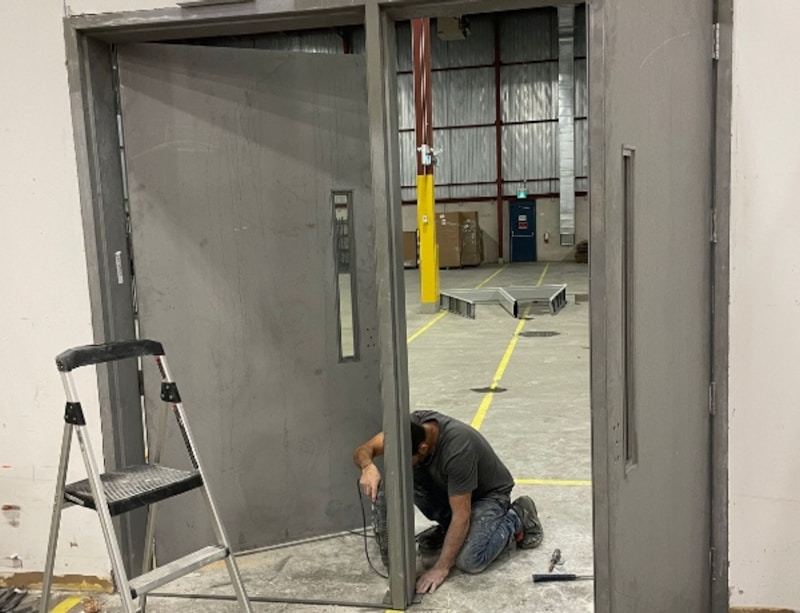
Fire doors are only effective when properly maintained. Yet industry surveys consistently reveal that a significant proportion of fire doors fail inspection due to avoidable defects — problems that put building occupants at risk and create legal liability for Responsible Persons.
Understanding the most common fire door defects, why they matter, and how to fix them is essential for maintaining BS 8214 compliance and meeting your obligations under the Regulatory Reform (Fire Safety) Order 2005.
Quick Reference: Common Fire Door Defects
| Defect | Priority | Typical Fix |
|---|---|---|
| Excessive gaps | Urgent | Adjust door/hinges, or replace door/frame |
| Missing intumescent seals | Urgent | Replace with fire-rated seal strips |
| Faulty self-closers | Immediate* | Adjust settings or replace closer |
| Damaged door leaves | Immediate* | Replace door leaf |
| Missing/incorrect hinges | Urgent | Install hinges per manufacturer certificate |
| Damaged smoke seals | Urgent | Replace brush or combined seals |
| Doors propped open | Immediate* | Remove wedges, fit hold-open devices |
| Missing signage | Urgent | Install required fire door signs |
| Unauthorised modifications | Varies | Remove or replace with fire-rated items |
| Frame defects | Planned | Refix frame, fill gaps with fire sealant |
| Missing certification label | Urgent | Verify door rating or replace if unidentifiable |
*Immediate = door cannot perform its fire safety function until resolved
Why Fire Door Defects Matter
A fire door with defects may fail to perform its critical function: containing fire and smoke to give occupants time to escape. Even minor issues can compromise the door’s fire rating, turning a 30-minute or 60-minute barrier into something far less effective.
Beyond safety, defects create legal liability. Under the Regulatory Reform (Fire Safety) Order 2005, Responsible Persons must ensure fire doors are maintained in good working order. Failure to do so can result in prosecution, unlimited fines, and personal liability.
Common Fire Door Defects
1. Excessive Gaps
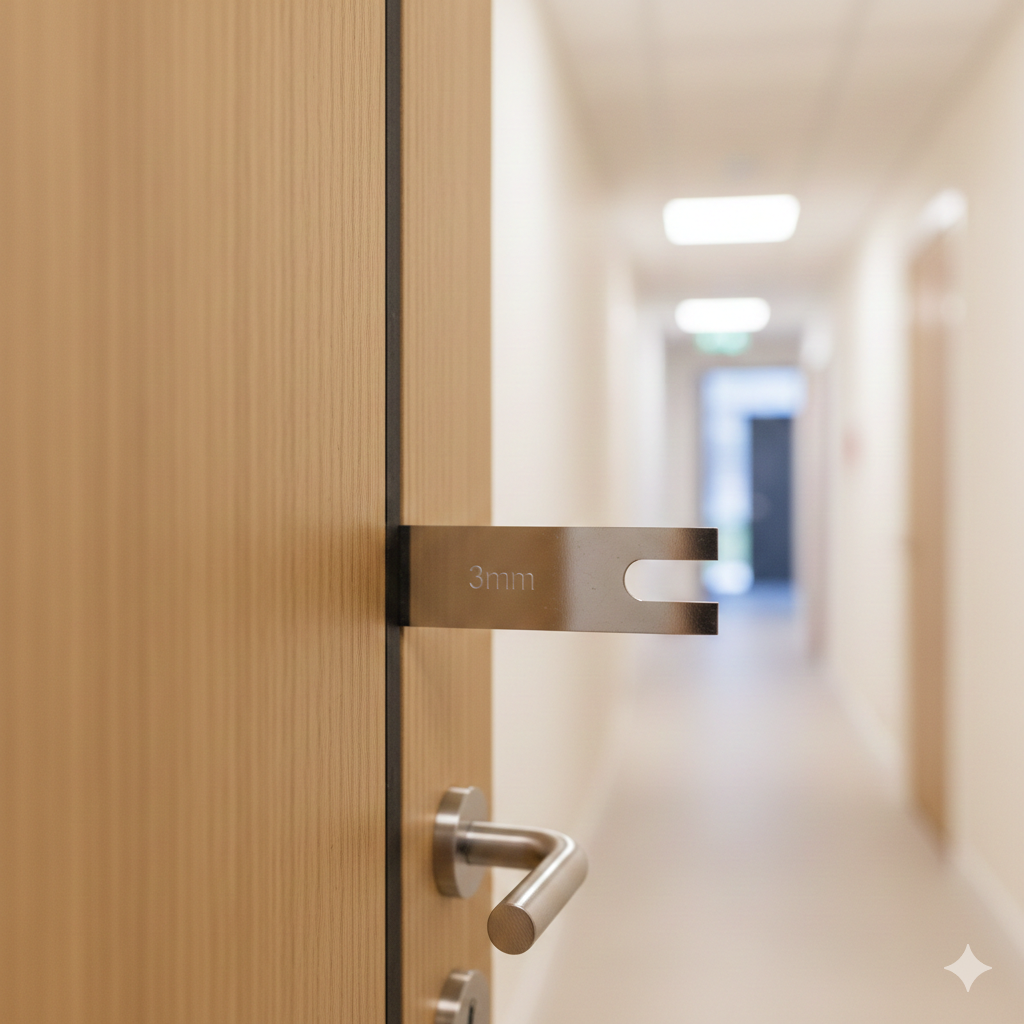
The Problem: Gaps between the door and frame exceed the tolerances specified in the door’s fire test evidence. BS 8214 provides general guidance:
| Location | Fire Doors | Smoke Doors (no threshold seal) | Smoke Doors (with drop-down seal) |
|---|---|---|---|
| Head (top) | 2-4mm | 2-4mm | 2-4mm |
| Jambs (sides) | 2-4mm | 2-4mm | 2-4mm |
| Threshold | 8-10mm* | ≤3mm | 8-10mm* |
*Always verify against the specific door manufacturer’s fire test evidence, as permitted tolerances may vary.
Why It Matters: Large gaps allow fire and smoke to pass through. Intumescent seals cannot bridge gaps that are too wide when they expand.
How to Fix:
- Adjust the door: Rehang on adjusted hinges, add packing behind hinges, or adjust the frame
- Trimming: Only trim the door edge if the manufacturer’s fire test evidence explicitly permits it and specifies the maximum amount — unauthorised trimming invalidates the fire rating
- Severe gaps: Replace the door or frame if warped beyond adjustment
Important: Fitting larger intumescent seals is not a compliant fix for excessive gaps. Seals must match the door’s certification, and gaps must be within the tested tolerances.
Prevention: Regular inspection catches gap issues before they become severe. Doors naturally settle over time, so periodic adjustment is normal maintenance.
2. Missing or Damaged Intumescent Seals
The Problem: Intumescent seals are missing entirely, have been painted over, are damaged, or have gaps in coverage.
Why It Matters: Intumescent seals expand when exposed to heat, filling gaps and preventing fire spread. Without them, the door cannot achieve its fire rating.
How to Fix:
- Remove any paint covering seals (if seals are still functional)
- Replace damaged or deteriorated seals with new fire-rated strips
- Ensure continuous coverage around head and jambs
- Use the correct seal size for the gap width (10mm, 15mm, or 20mm)
Prevention: When decorating, mask intumescent seals before painting. Include seal condition in regular inspections.
3. Faulty Self-Closing Devices
The Problem: The door closer doesn’t close the door fully, closes too slowly, slams shut, or fails to latch.
Why It Matters: Fire doors must self-close from any open angle and latch securely. A door that doesn’t close properly is effectively not a fire door.
How to Fix:
- Adjustment needed: Adjust closer speed and power settings (most have adjustment valves)
- Worn closer: Replace with new CE/UKCA marked closer of appropriate power size
- Wrong specification: Ensure closer is suitable for door weight and frequency of use
- Latching issues: Check latch alignment and adjust strike plate if needed
Prevention: Test closers during every inspection. They’re mechanical devices that wear with use.
4. Damaged Door Leaves
The Problem: Holes, cracks, splits, delamination, or significant damage to the door surface.
Why It Matters: Any breach in the door leaf creates a path for fire. Even small holes compromise fire integrity.
How to Fix:
- Minor surface damage: Limited repairs may be possible, but only using fire-tested repair methods with documented evidence that the door’s rating is restored. Generic filler kits and DIY repairs are not acceptable — they invalidate the fire rating
- Holes or penetrations: Door leaf replacement is required. There is no compliant way to patch holes in a fire door
- Warping: Severely warped doors require replacement
Prevention: Address damage immediately. Don’t allow doors to be propped open with wedges (causes warping). Fit kick plates in high-traffic areas.
5. Missing or Incorrect Hinges
The Problem: Too few hinges, wrong hinge type (brass instead of steel), loose hinges, or hinges not rated for fire doors.
Why It Matters: Fire doors require hinges of the type, size, and quantity specified in the door manufacturer’s fire test evidence to maintain alignment and support during a fire.
How to Fix:
- Install hinges matching the door manufacturer’s fire certificate specifications (typically minimum three CE/UKCA marked fire-rated hinges)
- Use steel or stainless steel (not brass) unless otherwise specified in test evidence
- Tighten all loose screws – use longer screws if holes are worn
- Ensure hinges are appropriate size for door weight and height
Prevention: Check hinges at every inspection. Tightening screws is quick maintenance that prevents bigger problems.
6. Missing or Damaged Smoke Seals
The Problem: Smoke doors (FD30S, FD60S) missing brush seals or combined intumescent/smoke seals, or seals are worn, compressed, or incorrectly fitted.
Why It Matters: Smoke is the primary cause of fire-related fatalities — cold smoke spreads rapidly and silently before heat is detected. Smoke seals are distinct from intumescent seals: they block cold smoke at ambient temperature, while intumescent seals activate only under heat. If a door is designated as a smoke door, all required smoke seals must be present and functioning.
How to Fix:
- Install brush or combined intumescent/smoke seals at head and jambs as specified in the door’s certification
- Replace worn, compressed, or damaged brush strips immediately
- For thresholds on smoke doors: fit a drop-down (automatic) seal OR ensure gap is maximum 3mm
- Smoke seals must be compatible with the door’s fire test evidence
Prevention: Smoke seals wear faster than intumescent seals due to repeated door movement. Include brush condition and compression in every inspection. Treat smoke seal defects as high priority — they directly affect life safety.
7. Doors Propped or Wedged Open
The Problem: Fire doors held open with wedges, fire extinguishers, bins, or other objects.
Why It Matters: A propped-open fire door provides zero protection. It defeats the entire purpose of compartmentation.
How to Fix:
- Remove all wedges and obstructions immediately
- Install hold-open devices linked to fire alarm (door releases when alarm activates)
- For frequently-used doors, consider automatic door closers with hold-open function
- Address root cause – why are people propping doors open?
Prevention: Education is key. Explain why fire doors must remain closed. Make passing through doors easier if that’s the complaint.
8. Missing or Illegible Signage
The Problem: No “Fire Door Keep Shut” sign, damaged signs, or wrong signage for the door type.
Why It Matters: Signage is a legal requirement and reinforces proper behaviour. Missing signs indicate poor fire door management.
How to Fix:
- Install correct signage: “Fire Door Keep Shut” or “Fire Door Keep Locked”
- Use “Automatic Fire Door Keep Clear” for hold-open devices
- Replace damaged or faded signs
- Position signs at eye level on both sides of door
Prevention: Include signage check in every inspection. Signs are inexpensive to replace.
9. Unauthorised Modifications
The Problem: Letterboxes, cat flaps, additional locks, spy holes, or other modifications installed without fire certification.
Why It Matters: Any modification can void the door’s fire rating unless it’s been fire-tested as part of the assembly.
How to Fix:
- Letterboxes: Replace with fire-rated letterbox assembly (includes intumescent liner)
- Additional locks: Remove or replace with fire-rated hardware
- Spy holes: Remove and fill hole (or fit fire-rated viewer if available)
- Severe modifications: Replace the door
Prevention: Establish a policy requiring approval before any door modifications. Educate building users.
10. Frame Defects
The Problem: Frame loose in wall, frame out of square, gaps between frame and wall, architrave damage.
Why It Matters: The frame is part of the fire door assembly. A defective frame compromises the entire installation.
How to Fix:
- Loose frame: Refix securely to wall structure
- Gaps to wall: Fill with fire-rated sealant or intumescent mastic
- Out of square: May require frame replacement if door cannot be adjusted
- Damaged architrave: Replace and ensure fire stopping behind
Prevention: Frame problems often develop slowly. Regular inspection catches issues early.
11. Missing Certification or Traceability Label
The Problem: Fire door identification label is missing, damaged, or illegible, making it impossible to verify the door’s fire rating or trace its certification.
Why It Matters: Without a certification label, you cannot confirm the door’s fire rating or access the manufacturer’s test evidence. This makes it difficult to verify compliance and select appropriate replacement components.
How to Fix:
- Check for labels on the door edge (hinge side), frame, or top of door leaf
- If label is missing but door origin is known, contact manufacturer for replacement label or certification documentation
- If door rating cannot be verified, the door may need to be treated as non-compliant and replaced
- For third-party certified doors (e.g., BWF-CERTIFIRE), check the scheme’s online database using any visible reference numbers
Prevention: Record certification details in your fire door asset register during initial surveys. Photograph labels as part of inspection documentation.
Prioritising Repairs
Not all defects are equally urgent. Use this framework:
Immediate Action Required
- Doors propped open
- Missing seals with large gaps
- Damaged door leaves with holes
- Faulty closers (door won’t close/latch)
Urgent (Within 7 Days)
- Excessive gaps exceeding tolerances
- Damaged or missing intumescent seals
- Loose hinges
- Missing signage
- Missing certification labels (investigate door rating)
Planned Maintenance
- Minor gap adjustments
- Smoke seal replacement (if door still closes properly)
- Frame resealing
- Cosmetic damage not affecting fire rating
Documentation: A Compliance Requirement
Documenting fire door inspections and remedial work is not optional — it’s a regulatory expectation. BS 8214 recommends maintaining records of all inspections and repairs. The Fire Safety (England) Regulations 2022 require Responsible Persons in residential buildings to keep records of fire door checks. For Higher-Risk Buildings, the Building Safety Act 2022’s Golden Thread requirements mandate digital, accessible building safety information.
What to document:
- Record the defect – what was found, where, when
- Photograph evidence – before and after repair
- Document the fix – what was done, by whom, when
- Verify the repair – confirm the door now passes inspection
- Retain component specifications – keep records of replacement parts used
This documentation creates an audit trail demonstrating compliance to regulators, insurers, and building owners. Digital systems like IgnisTrack make this straightforward, with automatic timestamps, photo capture, and audit trails built into the inspection workflow.
When to Call a Specialist
Some repairs require specialist expertise:
- Door or frame replacement – must be installed correctly to maintain fire rating
- Significant frame work – fire stopping must be maintained
- Complex closer adjustments – wrong settings can cause door failure
- Glazed fire doors – glass replacement requires fire-rated materials and correct installation
For these situations, use FIRAS-registered or BM TRADA-certificated installers who can certify their work.
Conclusion
The most common fire door defects are largely preventable with regular inspection and timely maintenance. Gaps, seals, closers, and hinges account for the majority of failures — all relatively straightforward to address when caught early.
Key takeaways:
- Inspect regularly – catch defects before they become serious
- Document everything – records prove compliance and track history
- Act promptly – small problems become big problems if ignored
- Use competent contractors – fire door work requires appropriate expertise
- Educate building users – many defects result from misuse (propping doors, modifications)
Fire door compliance isn’t a one-time achievement — it’s ongoing maintenance. Regular inspection and prompt remediation of defects keeps fire doors performing their life-saving function and ensures you meet your legal obligations under UK fire safety legislation.
This guide is provided for general information purposes only. Specific repair requirements should be verified against the door manufacturer’s installation and maintenance guidance and relevant British Standards including BS 8214. For complex repairs, consult appropriately qualified fire door specialists.
IgnisTrack automatically tracks fire door defects and generates reports documenting remedial actions. Start your 14-day free trial to simplify your fire door compliance management.